

Is it truly legal to lay a loved one to rest in your backyard? Many families are surprised to learn that home burials remain a viable option across most U.S. states. While cemeteries dominate modern funeral practices, private property interments offer a deeply personal alternative rooted in tradition and legal precedent.
Forty-seven states permit families to establish burial sites on residential land, though regulations vary widely. Exceptions like Indiana and California strictly prohibit the practice, while Washington recently relaxed its rules. Even in permitted areas, local zoning codes often dictate setbacks, environmental protections, and documentation requirements.
This guide explores state-specific statutes, permit processes, and practical considerations for those exploring this option. Families retain custody of remains in nearly all jurisdictions, enabling direct oversight of burial logistics. Rural areas frequently accommodate these arrangements, provided health department approvals and land surveys are completed.
Key Takeaways
- 47 states allow residential burials with varying restrictions
- Three states (CA, IN, WA) prohibit or heavily regulate the practice
- Next of kin typically controls burial decisions without funeral home involvement
- Zoning laws and environmental regulations often apply
- Costs can be 80% lower than traditional cemetery services
Introduction to Home Burial on Private Property
Personalizing final arrangements has gained traction as families seek meaningful alternatives to conventional practices. Residential interments enable direct participation in memorialization while honoring individual wishes.
What Is a Home Burial?
A home burial involves laying remains to rest on privately owned land rather than in commercial cemeteries. This approach bypasses standardized funeral protocols, allowing customized ceremonies shaped by cultural traditions or personal beliefs.
Reasons Families Consider Private Burial
Three primary factors drive interest in residential interments:
| Factor | Home Burial | Traditional Funeral |
|---|---|---|
| Cost | $200-$2,000 | $7,000-$12,000 |
| Ceremony Style | Custom rituals | Standardized services |
| Location | Private property | Designated cemetery |
Emotional connections to land often motivate these decisions. Rural households frequently maintain multi-generational burial sites, while urban residents value memorial gardens. State laws typically require death certificates and zoning approvals, though specific rules vary.
Families appreciate controlling timelines and avoiding funeral home fees. Natural burials using biodegradable materials align with eco-conscious values. Always verify local ordinances before planning memorial arrangements.
Understanding Legal Aspects of Home Burials in the US
Navigating burial laws requires careful attention to state statutes and local ordinances. While 47 states permit residential interments, each jurisdiction imposes unique burial regulations governing depth, documentation, and environmental safeguards. Texas offers property tax exemptions for family cemeteries, while New Hampshire mandates 50-foot setbacks from water sources.
Home Burial Benefits Over Traditional Options
Families choosing private interments gain three key advantages:
- Cost control: Avoid cemetery plot fees and embalming costs
- Personalization: Design ceremonies reflecting cultural or spiritual values
- Ongoing access: Visit loved ones without cemetery operating hours
State laws determine whether funeral directors must participate. Georgia allows families to handle all arrangements independently, while states like New York require professional involvement. Always consult local zoning offices about setback requirements from structures and utilities.
Legal resources like NOLO emphasize recording burial sites on property deeds. This protects future owners and maintains land use records. Proper compliance prevents disputes over water table impacts or boundary lines.
Can You Bury Someone on Your Property?
Establishing a final resting place on residential land presents unique opportunities and challenges. While 47 states generally allow private property burials, Rome Monument emphasizes that local zoning laws often dictate specific conditions. These regulations typically address grave depth, distance from water sources, and neighbor notification requirements.
Virginia permits residential interments but enforces county-level rules about cemetery designations. California requires properties with six or more graves to be exclusively used for memorial purposes. Texas offers tax exemptions for family plots, incentivizing multi-generational burial sites when properly registered.
Three critical steps ensure compliance:
- Obtain death certificates and burial permits from local health departments
- Survey land to confirm no utility lines or protected wetlands are affected
- Record the site location with county deed offices
Environmental guidelines protect groundwater from contamination. Many jurisdictions mandate 3-5 foot soil coverage and biodegradable caskets. Urban areas often impose stricter rules than rural communities due to density concerns.
With proper documentation and adherence to laws, families can create meaningful memorial spaces. Always consult zoning boards and legal professionals before breaking ground. These precautions preserve both ecological safety and the sanctity of home-based remembrance traditions.
Navigating State Regulations for Home Burials
State laws create a patchwork of burial regulations that challenge families planning memorials. While most states allow residential interments, rules shift dramatically across county lines. Understanding these variations proves critical for compliance.
State-by-State Differences and Special Requirements
Nebraska demands graves be 150 feet from water supplies. Florida requires a licensed funeral director to file paperwork. Connecticut mandates special permits for properties under five acres. These examples highlight why researching local laws remains essential.
Three factors shape most state requirements:
- Minimum distances from structures (zoning setbacks)
- Environmental protections for groundwater
- Documentation filing timelines
Insights from Legal Resources
The Home Funeral Alliance provides updated state-specific checklists. NOLO’s legal guides clarify when professionals must participate. Urban areas often impose stricter zoning rules than rural counties.
Follow these steps to ensure compliance:
- Contact county health departments for regulations
- Review property surveys for utility line conflicts
- File burial site maps with deed records
Rhode Island allows home burials but bans them in Providence city limits. Such exceptions underscore why verifying local information saves time and prevents legal issues. Always cross-reference state statutes with municipal codes before proceeding.
The Role of Funeral Directors in Private Burials
Navigating memorial arrangements often raises questions about professional involvement. While many families handle private burials independently, certain situations demand licensed expertise to meet legal standards.
When a Licensed Funeral Director is Required
Ten states mandate funeral director participation for residential interments. Alabama, New York, and Louisiana require these professionals to file death certificates and coordinate body transportation. Their oversight ensures compliance with public health codes and zoning laws.
Key responsibilities handled by directors include:
- Securing permits within tight deadlines
- Preserving remains during delays
- Documenting burial site details for property records
States like Georgia allow families to manage the entire process. Michigan and Nebraska permit limited involvement, requiring funeral professionals only for specific tasks. This contrast highlights the importance of verifying local requirements.
Professional guidance proves invaluable during emotionally charged moments. Directors streamline paperwork while respecting cultural traditions. Their expertise prevents costly errors, particularly when navigating multi-state transport regulations.
Urban areas with strict zoning rules often benefit most from funeral director support. These experts help families balance personal preferences with legal obligations, ensuring memorials remain both meaningful and compliant.
Local Zoning Laws and Property Regulations
Local zoning codes shape burial site options more than many families realize. These laws protect public health while balancing private memorialization rights. Understanding specific ordinances ensures compliance and prevents future disputes over land use.

Setbacks, Proximity Rules, and Other Ordinances
Setback requirements dictate minimum distances between graves and key features. These rules prevent groundwater contamination and respect neighboring property rights. Common examples include:
| Requirement | Rural Example | Urban Example | Purpose |
|---|---|---|---|
| Distance from water | 100 feet | 150 feet | Prevent aquifer pollution |
| Property lines | 25 feet | 10 feet | Maintain boundary integrity |
| Structures | 50 feet | 30 feet | Ensure utility access |
Pennsylvania requires health department approvals for private plots. New Jersey mandates 200-foot setbacks from wells in some townships. Always verify rules with local zoning boards before site selection.
Follow these steps for compliance:
- Contact county planning offices for current ordinances
- Mark proposed sites using professional land surveys
- File approved burial maps with deed records
Rural areas often allow greater flexibility than cities. Urban property owners might face stricter rules about plot sizes and permits. Proper planning preserves both legal standing and environmental safety.
Securing Permits and Completing Legal Paperwork
Proper documentation forms the backbone of legally compliant home burials. While state laws differ, all jurisdictions require specific permits and certificates to protect public health and property rights.
Filing Death Certificates and Permit Applications
Obtaining a death certificate remains the first critical step. Licensed physicians typically sign this document within 24 hours of passing. Families must file it with county health departments before proceeding with any burial arrangements.
Follow this streamlined process:
- Secure three certified copies of the death certificate
- Apply for burial permits through local health authorities
- Submit property maps showing proposed grave locations
Timing proves crucial. Most states mandate embalming or refrigeration within 24-48 hours if not interring immediately. Urban counties often expedite permit approvals through online portals, while rural areas may require in-person submissions.
Common paperwork errors include incomplete witness signatures or incorrect plot coordinates. Double-check all forms against zoning requirements to prevent processing delays. Many families find funeral directors invaluable for navigating complex burial regulations efficiently.
Local health departments provide free checklists outlining required documents. Digital filing systems now streamline the process in 32 states, reducing approval times from weeks to days. Always retain copies of permits and certificates for future property transactions.
Immediate Steps After a Family Member’s Passing
When death occurs unexpectedly, swift action balances emotional needs with legal requirements. First responders or medical professionals must officially pronounce the passing. This critical step initiates the documentation process required for all memorial arrangements.
Legal and Practical Considerations Right After Death
Three urgent priorities demand attention within the first 24 hours:
- Obtain a signed death certificate from attending physicians
- Preserve bodies through refrigeration or temporary embalming
- Contact a licensed funeral director if state law mandates involvement
Families managing private burials should immediately notify close relatives. Cultural traditions may require specific rituals before interment. Keep detailed notes of all decisions and conversations.
Most states require filing death certificates within 3-5 days. Urban counties often provide online submission portals, while rural areas may need in-person visits. Always secure multiple certified copies for insurance claims and property transfers.
Medical examiners must investigate unexpected deaths. Prepare to share medical history and circumstances surrounding the passing. Licensed professionals can help navigate these sensitive requirements while respecting family wishes.
Transporting and Preserving the Body for Home Burial
Handling final arrangements personally requires careful planning for transportation and preservation. Families managing a home burial must prioritize both legal compliance and practical safety measures. Proper techniques ensure dignity for loved ones while meeting health regulations.
Methods of Preservation and Transportation Guidelines
Transporting remains typically involves using a family vehicle, though state laws vary. Most jurisdictions permit this practice if the body is secured in a sturdy container. Always notify local authorities beforehand to avoid misunderstandings during transit.
Key preservation methods include:
- Refrigeration at 40°F or below
- Dry ice applications (25 pounds per 24 hours)
- Temporary embalming for delayed ceremonies
| Method | Duration | Legal Notice |
|---|---|---|
| Refrigeration | Up to 7 days | Required in 18 states |
| Dry Ice | 48-72 hours | Health department approval |
| Natural Preservation | 24 hours | Immediate burial needed |
Maintain remains integrity by wrapping bodies in biodegradable materials. Avoid plastic wraps that trap moisture and accelerate decomposition. Families in California should review California-specific guidelines for additional requirements.
Communication proves vital throughout the process. File transportation permits and preservation plans with local health departments. Document all steps to ensure compliance with burial timelines and public safety standards.
Planning and Preparing the Home Burial Site
Creating a meaningful memorial space begins with strategic site selection. Rome Monument’s family burial guidelines recommend evaluating three key factors: zoning compliance, soil composition, and long-term accessibility.
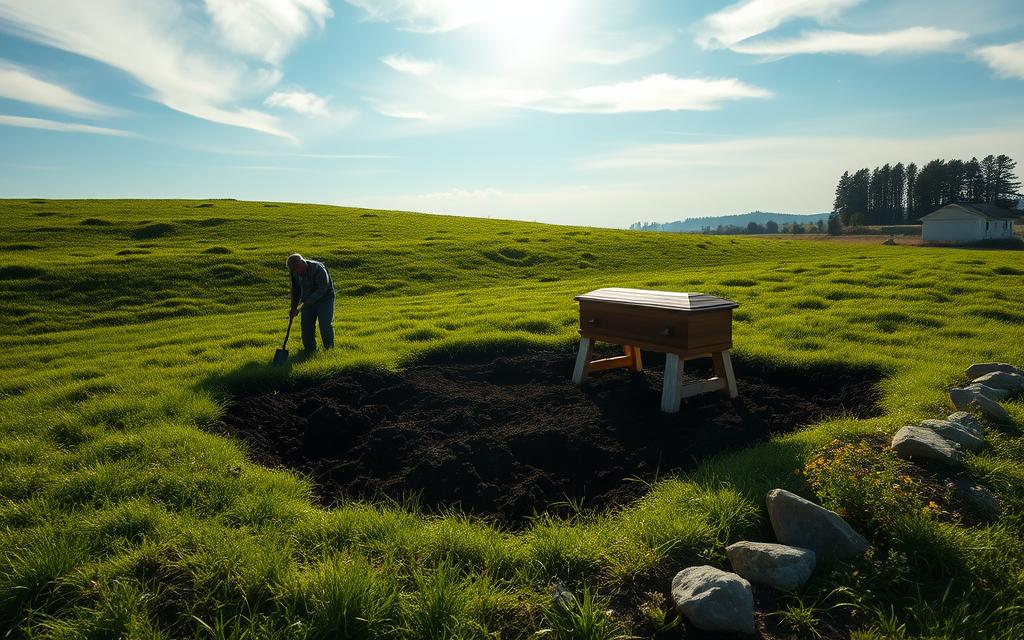
Choosing the Ideal Location
Prioritize areas meeting local setback rules from structures and water sources. Test ground stability by digging a small test pit – stable soil should hold shape without collapsing. Avoid low-lying spots prone to flooding or areas with visible utility markers.
| Factor | Consideration | Tools Needed |
|---|---|---|
| Setback Compliance | Measure from property lines | Surveyor’s tape |
| Soil Stability | Clay-rich earth resists erosion | Soil test kit |
| Future Access | Clear pathways for ceremonies | Pruning shears |
Clearing and Marking Techniques
Remove surface debris and mark the grave boundaries with wooden stakes. Use twine to outline a rectangle 8 feet long and 3 feet wide. Preserve topsoil separately from deeper clay layers for proper site restoration.
Follow these steps for documentation:
- Photograph the marked plot from multiple angles
- Record GPS coordinates using smartphone apps
- Update property deeds with burial site details
Maintain a 6-inch soil buffer around the excavation area to prevent collapse. Urban properties may require certified land surveys before digging begins. Always file location certificates with county offices to protect future ownership rights.
Step-by-Step Guide to Digging a Grave on Your Property
Proper grave preparation combines practical skills with regulatory compliance. Carolina Memorial Sanctuary recommends dedicating 8-12 hours for manual excavation, depending on soil conditions. Follow these methods to create a safe, lasting memorial site.
Essential Tools and Equipment
Successful excavation requires specialized gear. A basic toolkit includes:
| Tool | Purpose | Safety Tip |
|---|---|---|
| Round-point spade | Breaking surface layers | Wear steel-toe boots |
| Mattock | Loosening compacted earth | Secure handle tightly |
| Post-hole digger | Removing deep soil | Check for utility lines |
| Tamping rod | Compacting walls | Test stability hourly |
Managing Soil Layers and Excavation Techniques
Preserve soil layers to prevent collapse and aid site restoration. Follow this process:
- Remove topsoil (0-12″) separately for final covering
- Excavate subsoil (12-30″) while shaping vertical walls
- Reach minimum 42″ depth in clay layers for stability
| Layer | Depth | Handling Method |
|---|---|---|
| Topsoil | 0-12″ | Store on tarps |
| Subsoil | 12-30″ | Stack separately |
| Clay | 30″+ | Form compacted base |
Maintain a 3:1 width-to-depth ratio for structural safety. Use laser levels to ensure even ground surfaces. Rope off the area immediately after digging to prevent accidents.
Consult a licensed funeral director if encountering water tables or rocky strata. Document each excavation phase with timestamps for compliance records. This systematic approach honors both technical burial standards and emotional needs.
Choosing the Burial Method: Traditional, Natural, or Cremation
Selecting a final resting method involves balancing personal values with practical realities. Families often face emotional decisions influenced by burial costs, environmental concerns, and cultural traditions. Three primary options dominate modern memorial practices, each with distinct advantages and limitations.

Comparing Memorial Approaches
Traditional burial typically uses embalming chemicals and concrete vaults, averaging $7,000-$12,000. Natural interments skip these processes, costing $2,000-$4,000 with biodegradable shrouds. Cremation ranges from $1,000-$3,000 but releases 534 pounds of CO₂ per procedure.
| Method | Cost Range | Environmental Impact | Customization |
|---|---|---|---|
| Traditional | $7k-$12k | High (chemicals) | Limited |
| Natural | $2k-$4k | Low (biodegradable) | High |
| Cremation | $1k-$3k | Moderate (emissions) | Medium |
Aligning Values With Choices
Natural burial supports ecological restoration through native plantings and chemical-free practices. Many faiths embrace cremation, while others require earth interments. Urban families often prioritize space-saving options, whereas rural households may value multi-generational home memorials.
Key considerations include:
- Long-term land accessibility for future generations
- State regulations on scattering ashes
- Family traditions shaping ceremony styles
Financial planning tools like payable-on-death accounts help manage expenses. Always discuss preferences early to honor loved ones’ wishes while maintaining legal compliance.
Establishing a Family Cemetery for Long-Term Burial Options
Designating land as a family cemetery creates a lasting legacy while meeting legal standards. This formal approach transforms private plots into recognized memorial spaces, offering multi-generational remembrance solutions.
Legal Steps to Register a Family Cemetery
Virginia law defines cemeteries as land used for human interments, requiring specific approvals. Follow this four-step process:
- Contact local zoning offices to verify acreage minimums and proximity rules
- Secure health department permits verifying groundwater safety
- File cemetery declarations with county deed records
- Install permanent boundary markers meeting state specifications
New York requires 250-yard setbacks from neighboring homes unless separated by highways. Rural areas often permit cemeteries on 2+ acre parcels, while urban zones may demand 5+ acres. Historic presidential estates like Mount Vernon demonstrate successful long-term maintenance of private burial grounds.
Key benefits include:
- Preservation of family history across generations
- Simplified estate planning through recorded land use
- Tax advantages in 18 states for designated memorial sites
Always consult land surveyors to avoid utility conflicts. Proper registration protects against future disputes and ensures families maintain visitation rights indefinitely.
Addressing Future Property Concerns and Legal Implications
Planning a private memorial site demands attention to long-term land stewardship. While residential burials offer personal significance, they create unique obligations for current and future stewards. Proper documentation protects both memorial integrity and ownership rights.
Resale Value and Ownership Transfers
Memorial sites may influence real estate transactions. Some buyers appreciate historical connections, while others hesitate due to perceived restrictions. Key factors affecting marketability include:
- State disclosure requirements for burial sites
- Local zoning codes governing land use changes
- Cultural attitudes toward residential memorials
| Factor | Positive Impact | Potential Concern |
|---|---|---|
| Documentation | Clarifies land use history | Requires legal updates |
| Location | Creates heritage value | Limits development options |
| Maintenance | Preserves site dignity | Adds long-term costs |
Legal Protections for Permanent Memorials
New York and 18 other states recognize perpetual burial rights when properly recorded. Essential safeguards include:
- Filing site maps with county deed offices
- Adding restrictive covenants to property titles
- Updating wills with maintenance instructions
Correction instruments can amend deeds if burial details change. Transfer-on-death deeds allow seamless inheritance while preserving memorial access. Always consult estate attorneys before altering boundaries or selling land with graves.
Families should maintain a burial register with GPS coordinates and photographs. This proof helps resolve disputes and ensures future owners respect the site’s sacred purpose.
Resources and Expert Guidance for Home Burial Practices
Accessing reliable resources streamlines the process of creating meaningful home memorials while maintaining compliance. Trusted organizations provide actionable checklists, legal templates, and directories of professionals specializing in residential interments.
Essential Legal and Educational Tools
Three organizations offer critical support for families:
- Funeral Consumers Alliance: State-specific guides on zoning regulations and permit requirements
- National Home Funeral Alliance: Training programs for handling remains and filing certificates
- NOLO Legal Encyclopedia: Downloadable burial site declaration forms
Cremation.Green provides Texas-specific guidance for eco-conscious practices. These resources help navigate complex regulations while honoring personal preferences.
Selecting Qualified Professionals
When choosing a funeral director or advisor:
- Verify state licensure through official databases
- Request references from families who managed home memorials
- Compare service fees for care coordination and paperwork assistance
Specialists like Green Burial Council-certified providers ensure compliance with environmental standards. Many offer free initial consultations to discuss home burial logistics and time management strategies.
Contact organizations directly through their websites or helplines for personalized support. Proper guidance reduces stress during emotionally challenging transitions while safeguarding legal rights.
Conclusion
Creating a lasting tribute through private property memorials requires balancing legal precision with heartfelt intention. While navigating burial regulations demands effort, families gain meaningful ways to honor loved ones through personalized ceremonies and cost-effective solutions.
Key steps include securing permits, verifying plot locations, and documenting site details. These measures protect groundwater safety and preserve memorial access for future generations. Many find comfort in designing unique rituals unconstrained by traditional funeral timelines.
Adhering to rules remains critical – from zoning setbacks to health department filings. Consulting licensed directors or legal professionals helps avoid costly errors, particularly in states like New York with strict disclosure requirements.
Use provided resources to research state-specific guidelines. Thorough preparation transforms complex legal processes into empowering experiences that celebrate life while respecting ecological and community standards.



At one point there was an expert in Ann Arbor Michigan who knew the local details I have lost that contact number. Would you know who that might be?
Hi, I’ve recently decided to put my husband, and my husband to rest on my property. I live in Gladwin, MI, on .25/acre. I’m not in town but outside of the city boundaries. Both of my loved ones were cremated.
I’m going to start the method for a burial area for them in my yard.
Thank you so very much for all of this information, it has truly helped me,
Georgina Jordan