
Ever wondered if cops can give you a ticket on private land? The answer might surprise you. It’s more complex than you think.
Police power on private land isn’t always clear. Many think private land is safe from traffic tickets. But, the truth varies by state.
Knowing your rights and local laws is key. This guide will explain when cops can ticket you on private land.
Key Takeaways
- Police can issue tickets on private property under certain circumstances
- State laws significantly influence enforcement powers
- Property ownership doesn’t automatically shield you from legal consequences
- Traffic violations can be cited regardless of property type
- Understanding local ordinances is key to protecting your rights
Understanding Police Authority on Private Property
Police actions on private property need clear rules. These rules help everyone know when police can act. It’s all about legal limits and who has power.
Private property has its own rules. Owners have rights. Police must respect these rights while doing their job.
Defining Private Property
Private property includes:
- Residential homes and yards
- Private businesses
- Gated communities
- Privately owned parking lots
Police Powers Explained
Police can enter private property in certain situations. They need:
- A valid search warrant
- An emergency
- Permission from the owner
- To see clear crime happening
| Scenario | Police Authority | Property Owner Rights |
|---|---|---|
| Emergency | Full entry permitted | Limited restriction |
| Warrant | Specific search allowed | Must comply |
| Consent | Authorized entry | Can revoke permission |
Knowing these rules helps keep everyone safe. It protects both personal rights and public safety.
Circumstances for Issuing Tickets
Understanding traffic rules on private property is key. Police have rules for non-roadway traffic violations in private areas.
Police think hard about property rights and legal areas when stopping traffic on private land. The rules for driving on private property are tricky for everyone.
Traffic Violations on Private Roads
Private roads have special rules for traffic stops. Important things include:
- Property owner’s okay to give tickets
- Signs showing who’s in charge
- How bad the traffic mistake was
- Is it a danger to others?
Police can give tickets for big traffic mistakes, even on private roads. Big safety risks usually mean police can act, even if it’s on private land.
Trespassing and Law Enforcement
Trespassing and traffic rules mix up the law. Police have to think about property rights and safety.
| Violation Type | Police Authority | Property Owner’s Rights |
|---|---|---|
| Minor Traffic Violation | Limited intervention | Can ask for removal |
| Serious Safety Violation | Full power to enforce | Must help |
| Criminal Activity | Can act right away | No limits |
Knowing these details helps people deal with legal issues on private land. It’s good for both property owners and drivers to understand their rights and duties.
The Role of Local and State Laws
Understanding law enforcement on private property is complex. It needs a deep look at local and state laws. Each place has its own way of handling these issues.
How laws work about law enforcement on private land changes a lot from state to state. People who own property or live there need to know these rules. It helps them know their rights and how they might deal with police.
State Regulation Variations
State laws make a mix of rules that affect police power on private land. Some main differences are:
- When police can enter without a warrant
- Rules on giving out tickets
- When property owners must agree to police actions
- What kinds of private places police can handle
Local Ordinances and Enforcement Strategies
Local areas make their own rules for police on private land. These rules can include:
- Rules for parking
- Specific rules for private lots
- How police handle different kinds of property
- How to give out fines
Knowing these local rules is very important. It helps both property owners and police follow the law. It also protects everyone’s rights.
Common Situations: When It Can Happen
Understanding parking lot ticket laws and citations on private property is key. Different places have their own rules for drivers and police.
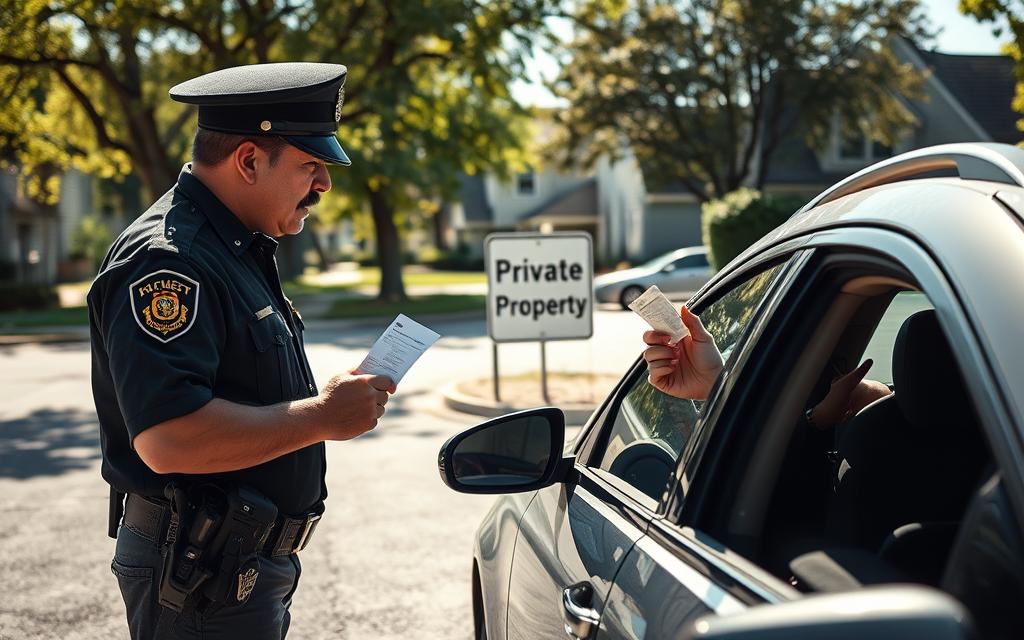
When police meet drivers on private property, it’s complex. Property owners have rights, but police can enforce rules for safety.
Private Parking Lots: Legal Enforcement Zones
Parking lot laws are tricky. Owners let police handle serious issues. Here are some examples:
- Dangerous driving behaviors
- Suspected criminal activities
- Violation of clearly posted regulations
Gated Communities and HOA Road Police Ticket Dynamics
HOAs have their own rules for police. A ticket might be given in these cases:
- Repeated traffic violations
- Speeding within community boundaries
- Unauthorized vehicle presence
Citations on private driveways need strong reasons. Police must show a safety issue or a local law break.
| Property Type | Police Ticket Likelihood | Common Violations |
|---|---|---|
| Shopping Center Parking | High | Reckless Driving |
| Residential Complex | Medium | Parking Restrictions |
| Gated Community | Low | Speed Limit Violations |
Knowing these rules helps drivers avoid legal trouble and follow local laws.
The Difference Between Civil and Criminal Tickets
Understanding traffic citations on private property is key. Knowing the difference between civil and criminal tickets is important. This helps property owners and drivers know their rights when a ticket is given.
Who can give out private traffic tickets is not always clear. Different tickets have different levels of seriousness and consequences.
Traffic Citations: Civil Offenses
Civil traffic tickets are for less serious offenses. They don’t need to go to criminal court. Examples include:
- Parking violations
- Minor traffic rule breaches
- Non-dangerous moving violations
Criminal Offenses: Serious Legal Implications
Criminal tickets are for more serious offenses. They might lead to legal actions beyond fines.
| Ticket Type | Potential Consequences | Legal Severity |
|---|---|---|
| Civil Traffic Citation | Monetary Fine | Low |
| Criminal Traffic Ticket | Potential Arrest, Court Appearance | High |
Criminal offenses on private property include:
- Reckless driving
- Driving under the influence
- Significant property damage
Knowing the difference helps people make smart choices when dealing with traffic issues on private property.
Implications of Private vs. Public Spaces
Knowing the law in private and public areas is tricky. It affects how police act. The rules change a lot when they’re on private land.
When cops give tickets on private land, it gets complicated. It’s important to look at who owns the land and who has the right to enforce the law.
Navigating Legal Complexities
Property owners have rights that affect police. Important things to think about are:
- Who owns the property
- Signs and rules posted
- What kind of problem there is
- If the police have permission
Real-World Enforcement Examples
Courts have looked at many cases about tickets on private land. They check things like:
- Why the police were there
- How much power the police have
- The owner’s rights
- If the police broke any laws
Legal cases show that the situation is very important. Property owners need to know their rights. But, police might have good reasons to be there too.
Authority of Security Personnel
Private property traffic laws make things tricky for security people and cops. It’s key to know who can make rules on private land.
Security guards have limits when they manage traffic and safety on private land. They can’t do the same things as real cops.
Private Security vs. Law Enforcement Powers
Security people can’t do as much as police. They mainly do:
- Watch the property lines
- Tell about possible problems
- Ask people to leave the property
- Write down odd things
Legal Constraints for Security Guards
Security guards can’t do some things cops can. They can’t:
- Give out official tickets
- Make arrests unless they see a crime
- Use too much force
- Keep people longer than they should
Property owners need to know security guards are just there to watch and scare off trouble. They’re not real cops.
The Importance of Signage on Private Property
Going through private property can be hard, mainly when figuring out parking and driving rules. Signs are key in telling what’s allowed and what’s not in private spots.
Owners put up signs to set clear rules for parking. These signs do a few important things:
- They tell drivers what parking and driving rules are.
- They help protect the property owner’s rights.
- They warn drivers about what might happen if they break the rules.
- They make it clear who enforces the rules on private lots.
Role of Signs in Enforcing Rules
Signs are not just suggestions. Private property driving rules rely on clear, easy-to-read signs. Good signs can stop confusion and legal problems.
Legal Weight of Posted Regulations
Signs on private property mean a lot if they follow certain rules. Owners must make sure their signs are:
- Easy to see
- In places where people notice them
- Written in simple words
- Follow local laws
If signs meet these rules, owners can enforce their parking and driving rules. They might give tickets or ask drivers to leave.
Implied Consent and Welcome Areas
Understanding police rights on private land is key. When we enter public areas, we might give police special powers. This is called implied consent.
- Commercial parking lots
- Shopping center driveways
- Apartment complex common areas
- Restaurant parking spaces
Decoding Implied Consent
In public spaces, implied consent means we agree to follow rules. Property owners set rules for police to follow. This lets them patrol and handle problems.
Law Enforcement Presence Dynamics
How much police can do varies. It depends on the place, local laws, and the situation.
| Area Type | Police Authority Level | Typical Enforcement Actions |
|---|---|---|
| Open Parking Lots | High | Traffic citations, safety checks |
| Gated Communities | Moderate | Restricted access, resident verification |
| Private Residential Areas | Limited | Warrant-based interactions |
Knowing these rules helps us keep our rights. It also lets police do their job.
When to Contest a Ticket on Private Property
Challenging a ticket on private property needs careful planning and legal knowledge. It’s complex, but knowing your rights helps you defend well.

Winning a case against a private property ticket depends on the situation and evidence. Both property owners and individuals have ways to fight tickets.
Grounds for Appealing a Ticket
Good reasons to contest a ticket on private property include:
- Unclear or missing signs
- Law enforcement not allowed there
- No clear permission to issue tickets
- Doubt about the reason for the ticket
Collecting Evidence for Your Case
To build a strong defense, gather all the evidence you can:
- Take photos of the location and around it
- Get statements from witnesses
- Find out who owns the property
- Keep any talks with police
Legal experts say to document everything carefully. It helps a lot in your case.
| Evidence Type | Importance | Potential Impact |
|---|---|---|
| Photographic Evidence | High | Shows what the place looks like |
| Witness Statements | Medium | Supports your story |
| Property Documents | Critical | Shows who owns the place |
Remember, being well-prepared and having good evidence can really help you win against a private property ticket.
The Impact of Ownership and Rental Agreements
Understanding law enforcement rights on private property can be tricky. Who owns the land and the rules of rental agreements matter a lot. They decide how police can act and when they can give tickets.
People who own property have special legal rights. These rights affect how police can enter and act on their land. Knowing these rights is key when facing tickets in apartment lots or other private areas.
Rights of Property Owners
Property owners have a lot of say over their land. They can decide who comes in and when. In cases of private property traffic laws, owners can:
- Choose if police can come in
- Set rules for cars and how they move
- Use their own ways to enforce rules
Protections for Renters
Rental agreements add more complexity to police dealings. Renters have some legal rights but also follow rules set by owners and local laws.
| Renter Protection Aspect | Legal Considerations |
|---|---|
| Lease Agreement Terms | Shows what police can do |
| Property Access Rights | Helps prevent unwanted searches and tickets |
| Notification Requirements | Makes sure you know about possible problems |
Renters should look closely at their lease agreements. This helps them know their rights and limits with police on their rented property.
Future Trends in Law Enforcement on Private Property
The way police work on private property is changing fast. New tech and laws are making big changes. They are changing how police follow rules on private land.

Some big trends are coming in driving rules on private property. They will change how police and property owners work together:
- Advanced surveillance technologies enabling more precise monitoring
- Digital documentation and evidence collection systems
- Enhanced training for officers regarding private property rights
- Increased use of artificial intelligence in identifying possible violations
Increasing Private Security Measures
Property owners are getting better security. Smart camera systems, automated gates, and live monitoring are common. They help keep places safe.
Legal Reforms in Ticketing Practices
New laws are making it clearer when police can act on private property. States are making rules that help both property owners and public safety.
These changes mean a future with more tech, clear laws, and teamwork. This will make police work on private land better and more fair.
Resources for Legal Help
Dealing with legal issues from police tickets can be tough. If you face a ticket on private property, getting the right help is key. You need experts to guide you through your options.
Finding the right lawyer is very important. Here are steps to help you:
- Research attorneys specializing in traffic and property law
- Check state bar association recommendations
- Review attorney credentials and past case success rates
- Schedule initial consultations to discuss your specific situation
Finding a Qualified Attorney
Look for lawyers who know a lot about private property tickets. Expertise matters when challenging complex legal boundaries. Find attorneys who:
- Know local and state traffic laws well
- Have experience with private property disputes
- Have a good track record of winning cases
Online Legal Consultation Options
Now, you can easily talk to lawyers online. Many websites offer:
- Free initial online consultations
- Virtual case evaluations
- Affordable legal advice packages
- Access to specialized traffic law attorneys
Getting professional advice can help you know your rights. It can also help you plan a strong defense against a ticket.
Conclusion: Know Your Rights
Understanding police rules on private land can be tricky. Knowing if a cop can ticket you on private property is key. Laws about police on private land change in each area, so knowing your local rules is important.
Police can issue tickets on private land in some cases. This is true even in places you think are safe. Things like local laws, the type of violation, and the property itself matter a lot.
It’s smart to learn about police rules on private land before you run into them. By knowing the rules, you can protect yourself and make good choices. Look up local laws, talk to lawyers, and keep up with new legal news.
Being aware is your best defense. Even though the rules about tickets on private land are complex, learning them helps you act right when you meet the police. Stay calm, know your rights, and get legal advice if you need it.